Flexible Heaters

Purpose-Engineered Flexible Heating Solutions for OEMs and Industrial Systems

Trusted Smart Heat Management® for demanding industrial applications.
Engineered with passion. Delivered with decades of experience.


Nexthermal designs and manufactures custom flexible heater solutions engineered to solve complex thermal challenges in demanding industrial and commercial environments. Built for precision, reliability, and long service life, our flexible heaters deliver exceptional thermal performance across applications ranging from life sciences and medical equipment to industrial machinery, electronics, electric motors, and process systems.

Unlike off-the-shelf heaters, every Nexthermal flexible heater is purpose-engineered to match the exact thermal, mechanical, and environmental requirements of the application. We partner directly with OEM engineers, integrators, and end users to develop optimized heating solutions that improve temperature uniformity, responsiveness, efficiency, and system reliability.

Because of their exceptionally low mass and highly adaptable construction, flexible heaters provide thermal performance advantages that conventional heating technologies often cannot achieve. Their ability to conform to flat, cylindrical, polygonal, conical, and irregular surfaces makes them ideal for applications where cartridge heaters, band heaters, or rigid heating assemblies are impractical.

The Nexthermal Difference

Smart Heat Management® Starts with Understanding the Problem

From compact instrumentation to large industrial equipment, Nexthermal flexible heaters are engineered to deliver fast response times, efficient heat transfer, and dependable operation under real-world conditions.

Flexible heaters are commonly used for

  • Condensation Prevention & Freeze Protection
  • Precision Temperature Control
  • Surface Heating & Thermal Uniformity
  • Evaporation & Moisture Removal
  • Heating of Irregular Geometries & Large Surface Areas
  • Rapid Thermal Cycling Applications

We do more than manufacture heaters — we help engineers solve thermal problems.

Heater & Circuit Technologies

Two heater constructions and two resistance circuit technologies, matched to the geometry, watt density and volume your application calls for.

Heater Constructions

Silicone rubber heater construction

Construction 01

Silicone Rubber Heaters

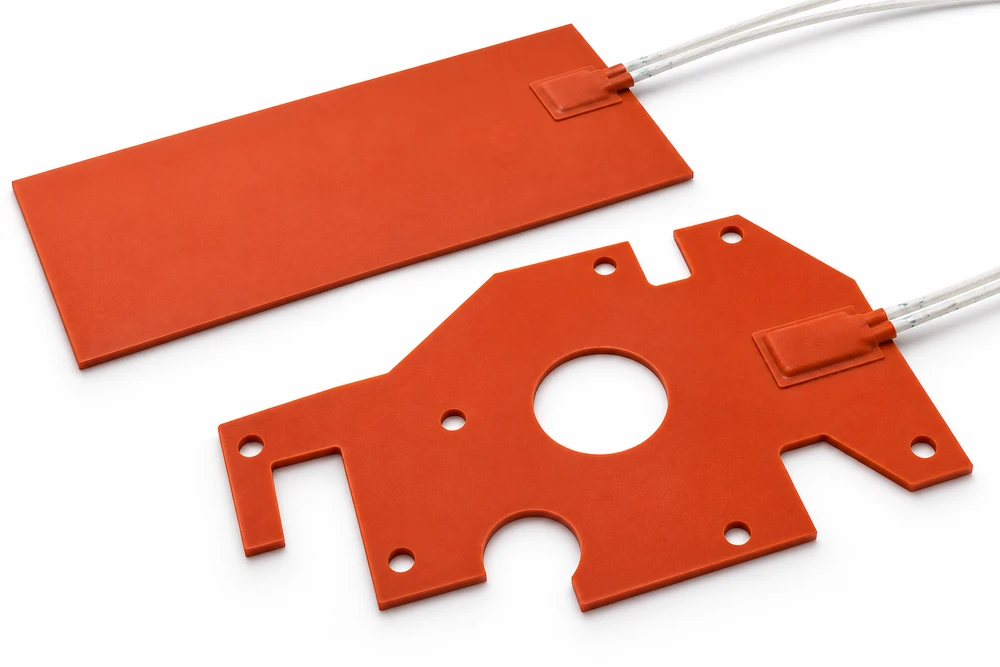
Silicone rubber heaters feature a resistance circuit laminated between durable, flexible silicone rubber layers to create a rugged, moisture-resistant, low-mass heating solution suitable for a wide range of industrial applications. Their flexibility, durability, and broad operating temperature capability make them ideal for tanks, enclosures, hoppers, cylinders, drums, and process equipment.

Polyimide heater construction

Construction 02

Polyimide (Kapton®) Heaters

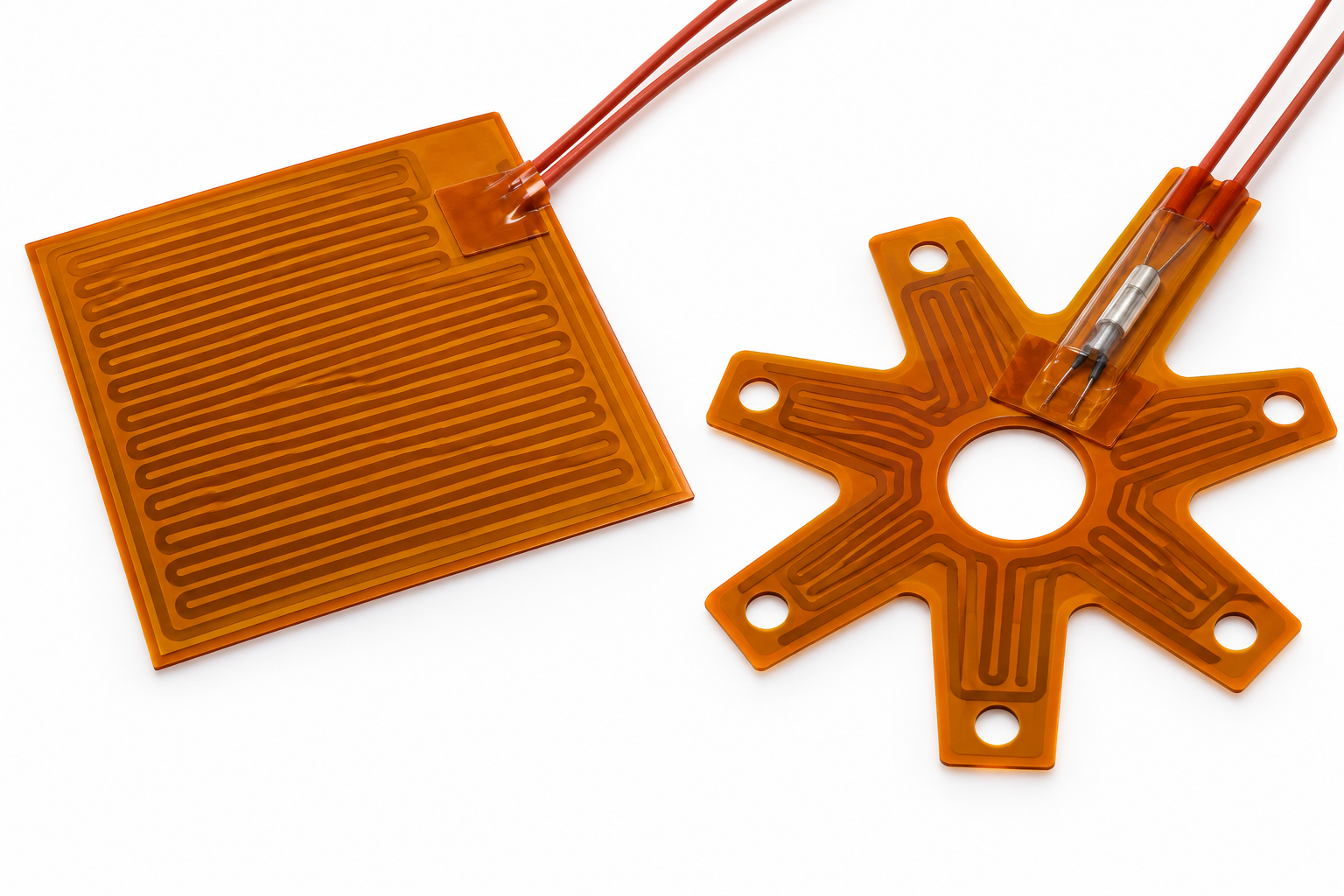
Polyimide heaters, commonly known as Kapton® heaters, utilize ultra-thin polyimide film construction — typically around 0.008” (0.20 mm) thick — to create exceptionally lightweight heaters with very fast thermal response characteristics. These heaters are ideal for precision thermal control applications requiring rapid temperature modulation, tight thermal uniformity, and minimal mass. Polyimide heaters are manufactured using etched foil resistance circuits, allowing for highly customized watt density distribution and complex temperature profiling across the heater surface.

Resistance Circuit Technologies

Wire wound heater construction

Circuit 01

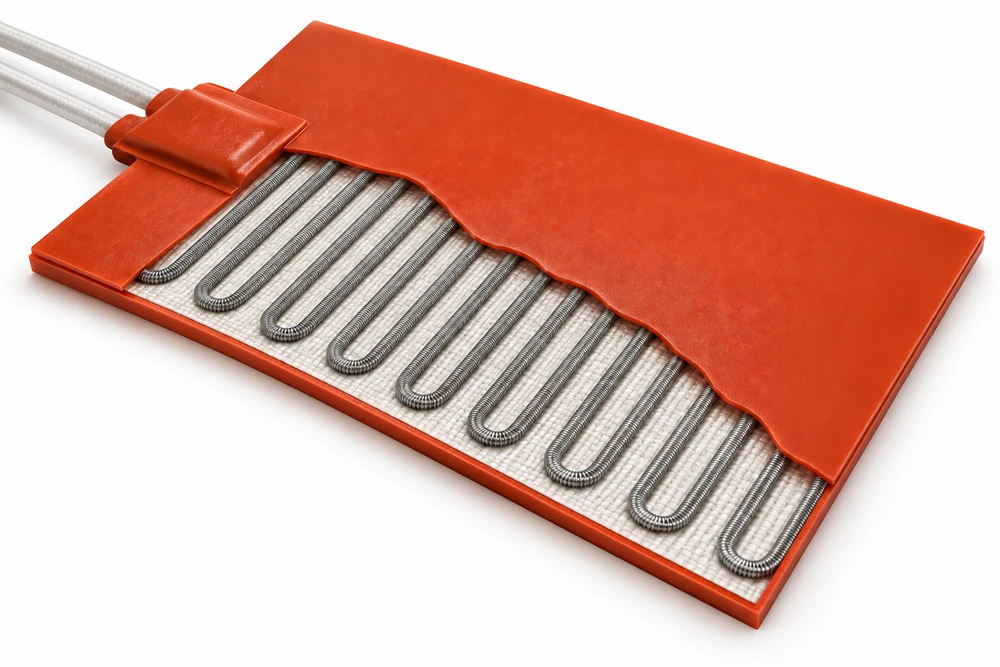
Wire Wound Circuits

Wire wound flexible heaters use a helically coiled resistance wire arranged in a serpentine pattern to match the geometry of the heater. This construction method is commonly used in silicone rubber heaters and is well suited for larger surface areas, custom geometries, and lower production volume applications.

Etched foil heater construction

Circuit 02

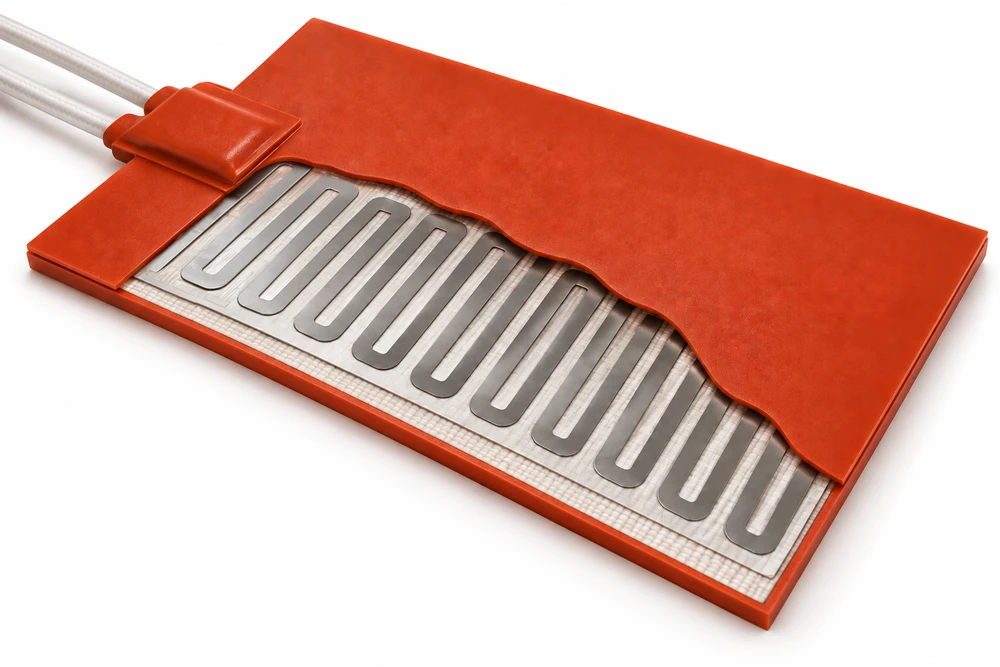
Etched Foil Circuits

Etched foil heaters utilize a chemically etched resistive foil pattern bonded within the heater construction. This technology enables precise watt density control, improved temperature uniformity, and complex multi-zone heating profiles. Etched foil construction is commonly used in both silicone rubber and polyimide heaters and is often the preferred solution for higher-volume OEM applications.

Markets for Flexible Heaters

Nexthermal Flexible Heaters support a wide range of markets and applications. The following is a small sample of markets and applications we serve.

Key Markets Served

Life Sciences & Analytics
Power Transmission & Energy
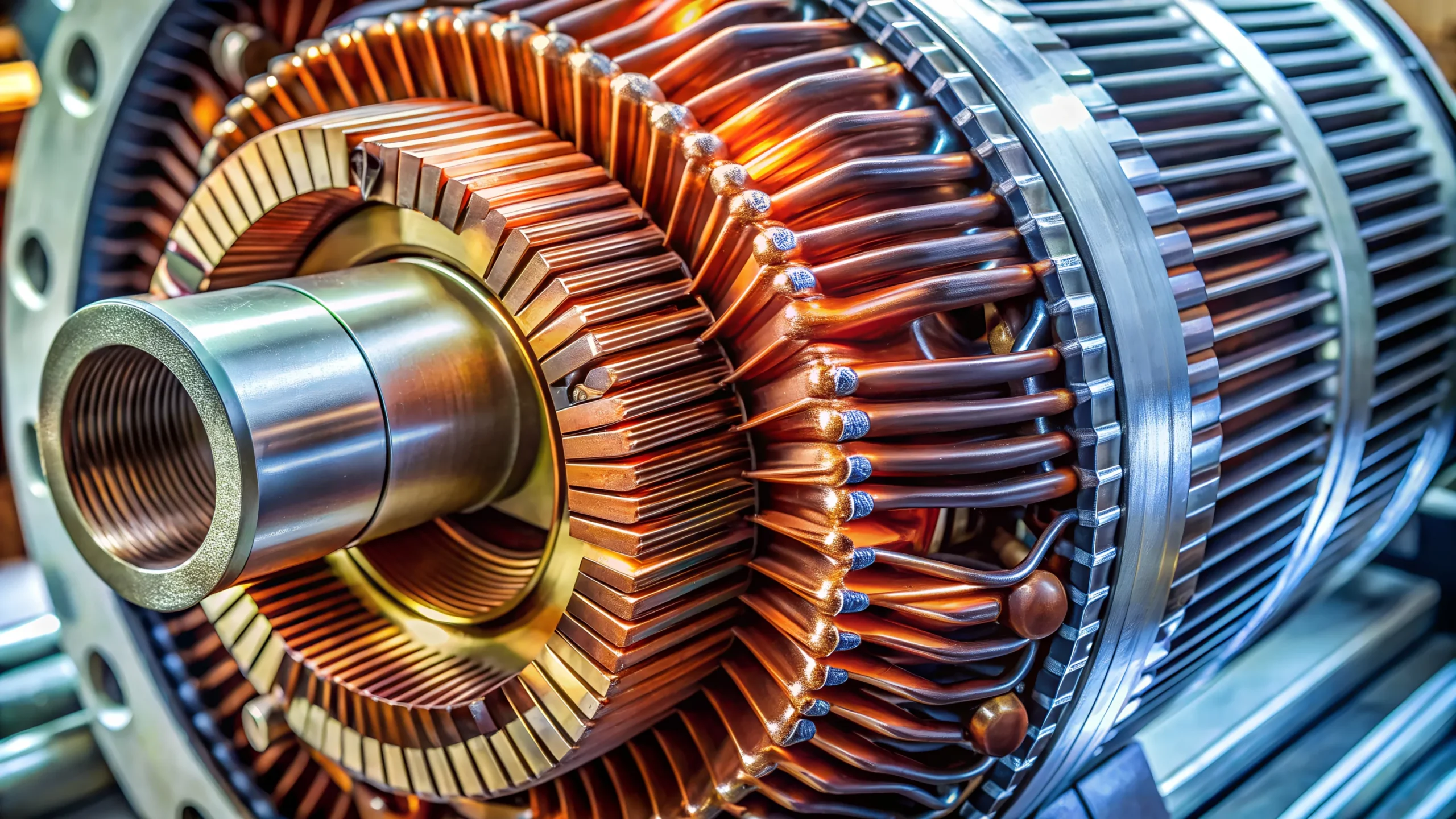
Electric Motors
Electric Motors
Semiconductor
Semiconductor
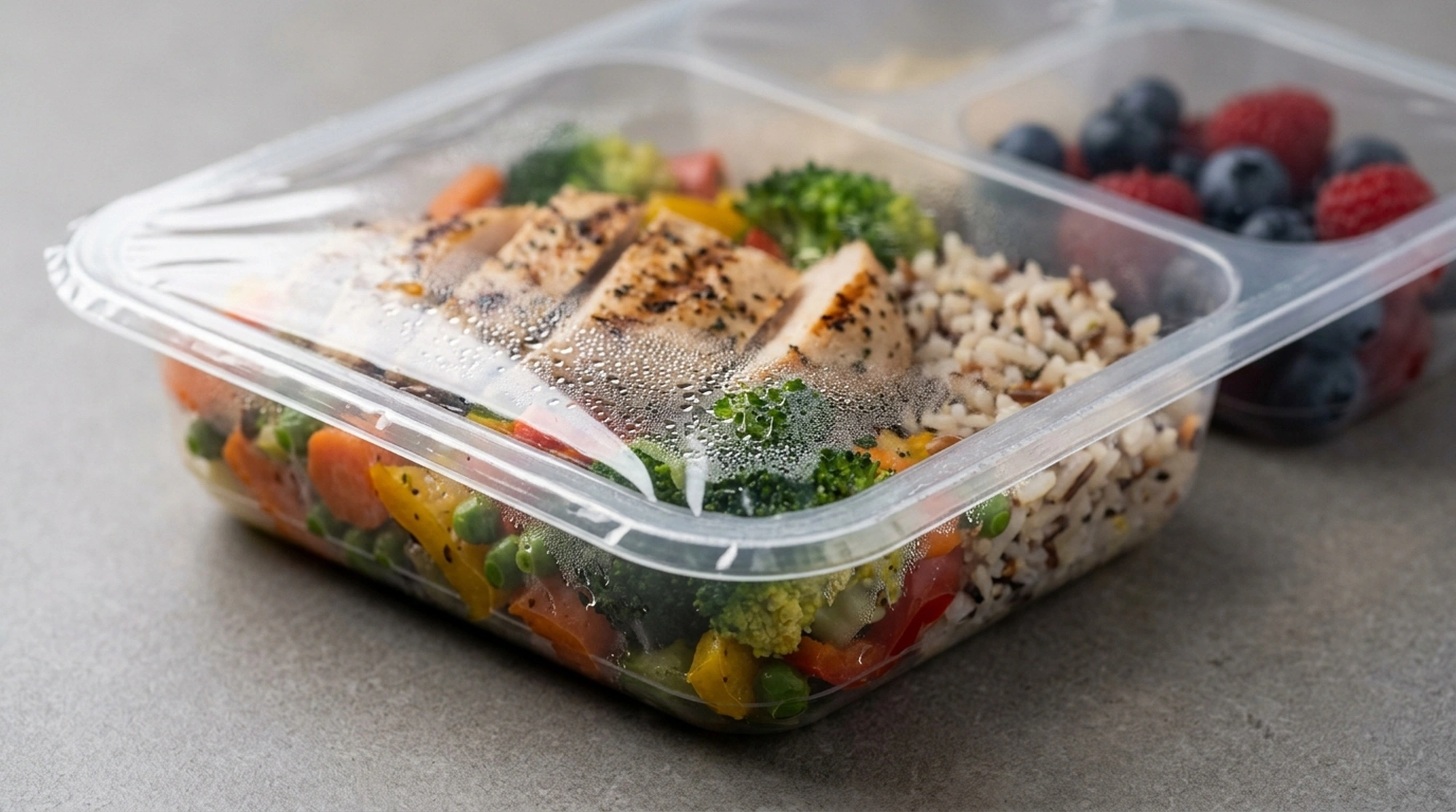
Food Service Equipment
Transportation & Aircraft
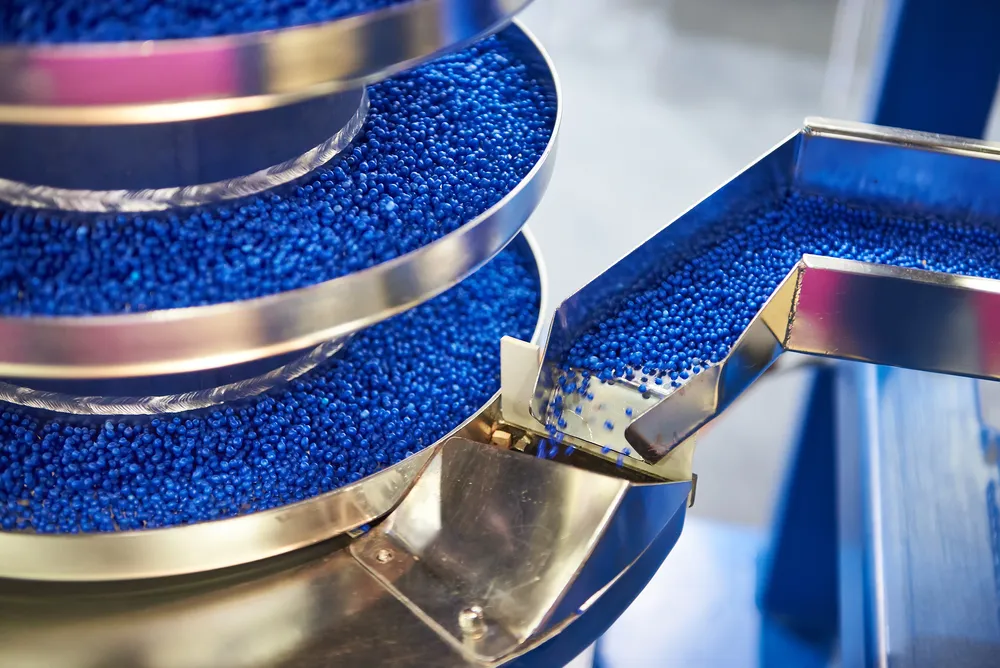
Plastics
Plastics
General Industrial
General Industrial

Applications for Flexible Heaters

Common
Applications

  • 01Diagnostic Instrumentation
  • 02Culture Sample Warming
  • 03Fluid Warming Systems
  • 04Incubation Equipment
  • 05Laboratory Instrumentation & Water Baths
  • 06Electronics Enclosure Condensation Evaporation
  • 07Electric Motor Stator Condensation Evaporation
  • 08Semiconductor Chucks and Gasline Heating
  • 09Food Warming: Tray Heating & Holding Cabinets
  • 10Battery Warming in Extreme Climates
  • 11EV Charging Equipment
  • 12ATM and Ticket Dispensing Equipment
  • 13Aircraft Composite Curing
  • 14Drum & Pail Heating

Solving Common Engineering Problems

Flexible Heater Design Parameters

Each Nexthermal flexible heater is engineered by our applications team using clearly defined thermal, mechanical, and environmental design inputs, including:

Every Nexthermal flexible heater is reviewed by experienced applications engineers to ensure optimal thermal performance, reliability, manufacturability, and long operational life in demanding real-world environments.

Technical Specifications, Construction & Configuration Options

How to Specify a Flexible Heater

Nexthermal flexible heaters are fully custom engineered to meet the thermal, mechanical, and environmental requirements of each application. The following design considerations help determine the optimal heater construction and configuration.

Step 01 of 05

Select Heater Insulation Material

The first step is selecting the heater construction best suited for the operating environment, temperature range, flexibility requirements, and thermal performance objectives.

Silicone Rubber Heaters

Silicone rubber heaters provide a durable, moisture-resistant, and highly flexible heating solution suitable for a wide variety of industrial and commercial applications. Their rugged construction makes them ideal for larger surface areas, outdoor environments, freeze protection, condensation prevention, and general process heating applications.

Polyimide (Kapton®) Heaters

Polyimide heaters feature ultra-thin, lightweight construction for applications requiring rapid thermal response, precision temperature control, and minimal mass. These heaters are commonly used in medical devices, electronics, semiconductor equipment, aerospace systems, and analytical instrumentation.

Please refer to the specifications table for detailed material capabilities and operating characteristics.

Engineering Design Guidelines

Flexible Heater Technical Specifications

Nexthermal flexible heaters are custom-engineered to meet application-specific thermal, mechanical and electrical requirements. Use the guidelines below as a starting point for OEM design. Final capabilities may vary based on heater geometry, element construction, mounting method, operating temperature, watt density and electrical requirements.

Specifications

Mechanical · Electrical

Mechanical

Silicone Rubber Heaters. Size, flexibility and environmental design limits.

Minimum Size0.50″ × 0.50″ (12.7 × 12.7 mm); smaller designs may be available
Maximum Size – Etched FoilUp to 22″ × 72″ (559 × 1829 mm)
Maximum Size – Wire WoundUp to 22″ × 90″ (559 × 2286 mm)
Dimensional Tolerance – < 6″±0.030″ (±0.76 mm)
Dimensional Tolerance – 6″ to 12″±0.060″ (±1.52 mm)
Dimensional Tolerance – 12″ to 18″±0.125″ (±3.18 mm)
Dimensional Tolerance – > 18″Application dependent – consult factory
Minimum Bend Radius0.125″ (3.2 mm) typical; heater should not be creased
Minimum Operating Temperature−40°F (−40°C)
Maximum Operating Temperature450°F (232°C) continuous design guideline
Intermittent TemperatureUp to 500°F (260°C), construction dependent
Moisture ResistanceExcellent – suitable for high-humidity and moisture-exposed applications
Chemical ResistanceGood resistance to many oils, chemicals, ozone and environmental contaminants; verify compatibility for specific media
Mechanical / Tensile StrengthFiberglass-reinforced construction provides excellent dimensional stability and mechanical strength; finished-heater strength is construction dependent

Polyimide Heaters. Thin-profile dimensional and environmental capabilities.

Minimum Size0.25″ × 0.25″ (6.4 × 6.4 mm); smaller designs may be available
Maximum SizeUp to 22″ × 72″ (559 × 1829 mm), construction dependent
Dimensional Tolerance – < 6″±0.030″ (±0.76 mm)
Dimensional Tolerance – 6″ to 12″±0.060″ (±1.52 mm)
Dimensional Tolerance – > 12″±0.125″ (±3.18 mm) typical
Minimum Bend Radius0.030″ (0.76 mm) typical; avoid sharp creasing
Minimum Operating Temperature−328°F (−200°C)
Maximum Temperature – Acrylic Construction302°F (150°C)
Maximum Temperature – FEP Construction392°F (200°C)
Maximum Temperature – All-Polyimide500°F (260°C)
Moisture ResistanceVery good – edge sealing and terminations should be considered for wet environments
Chemical ResistanceVery good resistance to many oils, solvents and chemicals; verify compatibility for specific media
Mechanical / Tensile StrengthExcellent strength-to-thickness ratio; finished-heater strength is construction dependent

Electrical

Silicone Rubber Heaters. Typical electrical performance and verification limits.

Maximum Voltage – Etched Foil480 VAC
Maximum Voltage – Wire Wound600 VAC
Maximum AmperageApplication dependent – determined by heater resistance, lead construction and termination
Typical Watt Density2.5–10 W/in²
Dielectric Withstand1000 VAC minimum
Insulation Resistance≥100 MΩ @ 500 VDC
Resistance Tolerance±10% standard
Wattage Tolerance±10% standard
Heating Element ConstructionEtched foil or wire wound

Polyimide Heaters. Typical electrical performance and verification limits.

Maximum Voltage480 VAC
Maximum AmperageApplication dependent – determined by circuit geometry, leads and termination
Typical Watt Density2.5–15 W/in²
Dielectric Withstand1000 VAC minimum
Insulation Resistance≥100 MΩ @ 500 VDC
Resistance Tolerance±10% standard
Wattage Tolerance±10% standard
Heating Element ConstructionPrecision etched foil

Terminations

PTFE Lead Wire · Lead Exit · Power Cord

PTFE Lead Wire Options

High-temperature, flexible, and chemically resistant lead wires for demanding applications.

PTFE Lead Wire – White

Stranded, silver-plated copper with PTFE insulation. Excellent high-temperature capability and chemical resistance.

PTFE Lead Wire – Red

Stranded, silver-plated copper with red PTFE insulation. Ideal for polarity identification and high-temperature applications.

PTFE Lead Wire – Black

Stranded, silver-plated copper with black PTFE insulation. Ideal for polarity identification and high-temperature applications.

Lead Exit Options

Available for Silicone Rubber and Polyimide heaters.

Exit Together – Centered

Leads exit together from the center of the heater width.

Exit from Corner – Right or Left

Leads exit together from the right or left side corner.

Exit from End – Right or Left

Leads exit together from the right or left end of the heater length.

Exit Opposite Ends – Length

One lead exits from each end of the heater length.

Exit from Center of Surface

Leads exit together from the center of the heater surface.

Custom lead exit locations are also available.

Power Cord Options

Durable, flexible, and ready for demanding environments.

HPN 2-Wire Cord (No Plug)

  • Heavy-duty, oil-resistant neoprene jacket (HPN)
  • Two conductors (black and white)
  • Flexible and rugged for industrial environments
  • Supplied with stripped leads (no plug)

HPN 2-Wire Cord (With Plug)

  • Heavy-duty, oil-resistant neoprene jacket (HPN)
  • Two conductors (black and white)
  • Supplied with molded plug (NEMA 1-15P standard)
  • Flexible and rugged for industrial environments

SJO 3-Wire Cord (No Plug)

  • Heavy-duty, oil-resistant jacket (SJO)
  • Three conductors (black, white, and green ground)
  • Flexible and durable for industrial and commercial use
  • Supplied with stripped leads (no plug)

SJO 3-Wire Cord (With Plug)

  • Heavy-duty, oil-resistant jacket (SJO)
  • Three conductors (black, white, and green ground)
  • Supplied with molded plug (NEMA 5-15P standard)
  • Flexible and durable for industrial and commercial use

Other plug types, cord lengths, and terminations are available upon request.

Design Guidelines

Engineering Design Note

Specifications shown represent typical design guidelines for custom flexible heaters. Maximum operating temperature, watt density and electrical ratings are interdependent and may be affected by heater size, geometry, mounting method, heat sink characteristics, insulation, ambient conditions and temperature control. Final heater specifications are confirmed by Nexthermal Engineering based on the application.

Watt Density Design Guideline

For optimum heater performance and service life, use the largest practical heater area and the lowest watt density capable of meeting the application’s thermal requirements. Proper heater-to-surface contact and temperature control are critical at elevated watt densities.

Temperature Control Options

Preset Snap Action · Adjustable Thermostat · Thermal Fuse

Preset Snap Action Thermostat

A preset, normally closed snap action thermostat is bonded to the heater and encased in a durable silicone rubber cap. The contacts open once the specified temperature set point is exceeded, providing reliable over-temperature protection.

  • Setpoint Range

    Available from 50 to 450°F in 10°F increments.

  • Current Parameters

    125 Vac, 15 Amp, 1875W
    250 Vac, 10 Amp, 2500W

Example: Preset Snap Action Thermostat encased in silicone rubber cap on a silicone rubber heater.

Adjustable Thermostat

An adjustable thermostat is bonded to the heater and encased in a durable silicone rubber cap, with the temperature adjustment dial exposed for easy access. Allows you to set and maintain the desired surface temperature.

  • Adjustment Ranges Available

    50 to 425°F (10 to 218°C)
    90 to 140°F (32 to 60°C)
    100 to 190°F (38 to 88°C)
    70 to 190°F (21 to 88°C)
    50 to 160°F (10 to 71°C)
    70 to 140°F (21 to 60°C)

  • Electrical Rating

    Amps: 12.5A @ 125V, 6.5A @ 250V
    Watts: 1500W @ 120V, 1560W @ 240V

  • Features
    • Adjustable temperature control
    • Dial exits silicone rubber cap
    • Durable and reliable design
    • Ideal for process temperature maintenance and freeze protection

Example: Adjustable Thermostat with dial exiting silicone rubber cap on a silicone rubber heater.

Thermal Fuse

Fail-Safe Overtemperature Protection. A thermal fuse is a fail safe device that ensures the heater surface temperature does not exceed a specified set point. The fuse permanently opens (irreversibly) when the temperature rating is reached, interrupting power to the heater. Thermal fuses are used in more critical applications where safety is paramount.

Thermal fuse encapsulated under a silicone rubber patch and wired into the heater leads.
Thermal fuse (example)
  • Key Benefits
    • Fail-safe overtemperature protection
    • Permanently opens at rated temperature
    • Ideal for critical applications where safety is paramount
  • Temperature Ratings

    Available from 50 to 450°F (10°F increments)

  • Electrical Ratings

    125 Vac, 15 Amp, 1875W
    250 Vac, 10 Amp, 2500W

Thermal fuses are available in a range of temperature ratings. Contact us to select the right option for your application.

Mounting Options

PSA · Factory Vulcanization · Brass Eyelets

Pressure Sensitive Adhesive (PSA)

For Fast, Reliable Heater Mounting. Silicone rubber heaters can be supplied with a high-performance pressure sensitive adhesive (PSA) on the back side for quick and easy installation. The adhesive provides a strong bond to a variety of clean, smooth surfaces, eliminating the need for mechanical fasteners or additional bonding agents in many applications.

  • Quick Installation

    Peel and stick for fast, secure mounting.

  • Strong, Reliable Bond

    High-performance adhesive provides excellent adhesion to metals and other smooth surfaces.

  • High Temperature Performance

    Designed to maintain adhesion in elevated temperature environments.

Technical SpecificationsSpecificationMountingPressure Sensitive Adhesive
Adhesive TypeHigh-performance, high-temperature pressure sensitive adhesive (PSA)
Maximum TemperatureContinuous Operation: 300°F (149°C)
Thermocycling: 500°F (260°C)
Recommended Watt DensityUnder 5 W/in² (0.78 W/cm²)
Bond StrengthExcellent adhesion to clean, smooth metal surfaces (e.g., aluminum, stainless steel, mild steel)
Application SurfaceClean, dry, smooth surfaces for best results
Release LinerEasy-peel liner for simple installation

Factory Vulcanization

Factory Vulcanized to Plate. A stronger bond for improved performance. Silicone rubber heaters can be factory vulcanized to metal plates or cylinders for a more secure, robust bond. This increases heat transfer efficiency and temperature uniformity, making it ideal for demanding applications.

  • Available Substrates
    • Stainless Steel
    • Aluminum
    • Anodized Aluminum

Vulcanized to Stainless Steel

Vulcanized to Aluminum

Vulcanized to Anodized Aluminum

Brass Eyelet Mounting

Silicone Rubber Heaters with Brass Eyelets. Silicone rubber heaters are often used on cylindrical or irregular shaped surfaces. Clamping can become challenging so eyelets are installed on heaters to provide a robust means of applying clamp force to ensure the heater makes excellent contact with the surface to be heated.

Brass Eyelet Detail0.375″ (3/8″) Inside Diameter

Typical Installation on Cylindrical SurfaceEyelets provide a robust means of applying clamp force to ensure excellent thermal contact with the surface to be heated.

Multiple mounting configurations are available. Contact us to select the right option for your application.

Enclosure Heaters

Enclosure Heaters for Condensation Evaporation

Made to customer specification. Manufactured with preset snap action thermostat – contacts open when temperature exceeds designated temperature set point.

Standard L-Bracket Mounting Style

Aluminum Sheet with 90° Bend and Foot

Low Profile Mounting Style

Aluminum Sheet with Bend Along 5″ Edge (Length)

SpecificationMounting StyleStandard L-BracketMounting StyleLow Profile
Heater face3.00″ W × 5.00″ H5.00″ L × 3.00″ H
Foot3.00″ × 3.00″—
Offset—0.75″ (side view)
Mounting4 mounting slots (for 1/4″ hardware)2 mounting holes (for 1/4″ hardware)
ThermostatPreset snap action thermostat (under silicone cap)
HeaterSilicone rubber heater (bonded to aluminum plate)
  • Helps Prevent Condensation

    Maintains elevated surface temperature to evaporate moisture in electrical enclosures.

  • Custom Designs

    Built to your specification for size, shape, thermostat set point, lead length and mounting configuration.

  • Preset Snap Action Thermostat

    Contacts open when temperature exceeds designated temperature set point.

  • Durable and Reliable

    Silicone rubber heater vulcanized to aluminum plate for excellent heat transfer and long service life.

Special Construction Options

Custom Shapes

Custom Shaped Silicone Rubber Heaters

Complex Shapes. Consistent Heat. Proven Performance.

Engineered to Fit Your Application. Nexthermal silicone rubber heaters can be manufactured in virtually any shape to match your specific application. Custom shapes are often used on cylindrical, conical, or irregularly shaped surfaces where standard rectangular heaters are not practical. Features such as brass eyelets, cutouts, and precision contours ensure easy installation and excellent thermal contact.

Round

Uniform Heating for Cylindrical Surfaces

Round heaters are ideal for drum heaters, pipe flanges, and tank bottoms. Center holes, lead exits and mounting features can be customized.

Oval

Designed for Non-Round Cylinders

Oval heaters provide excellent surface coverage for elliptical tanks, ducts, and custom equipment. Any size, aspect ratio, or lead exit location can be manufactured.

Polygonal Shapes

With Holes and Cutouts

Heaters can be made to match complex geometries with precision cutouts, holes, and notches for mounting, clearance, or integration with your equipment.

Conical Shape

Heaters for Tapered Surfaces

Conical heaters are designed to fit tapered surfaces. Brass eyelets provide a robust means of applying clamp force to ensure excellent thermal contact on cone and reducer sections.

Star Shape

For Specialty Applications

Star-shaped heaters are commonly used for valve bodies, manifolds, and other specialized equipment where uniform heating and clearance are required.

Half Rounds and Arcs

Designed to Fit Curved Surfaces

Half round and arc heaters are ideal for pipes, tubes, and curved surfaces. Multiple radii and angles can be produced to match your application.

Design Guidelines

To ensure the best performance and manufacturability for your custom shaped heater, please consider the following:

  • Size Range

    Typical minimum feature size: 0.50″ (12.7 mm). Contact us for smaller features.

  • Thickness

    Standard thickness: 0.062″ (1.57 mm). Other thicknesses available upon request.

  • Holes & Cutouts

    Minimum hole size: 0.25″ (6.35 mm). Precision cutouts can be added to match your design.

  • Bend Radius

    Minimum inside radius: 0.79″ (20 mm). Tighter radii may be possible – consult factory.

  • Temperature Rating

    Standard silicone rubber: up to 450°F (232°C). Higher temperature materials available.

  • Mounting Options

    Brass eyelets, cutouts, adhesive backing or custom features to suit your application.

Custom Shapes. Real Solutions. That’s Nexthermal. Contact us with your drawing or application requirements.

Value-Added Assemblies

At the core of delivering trusted smart heat management® solutions is helping Customers eliminate pain points by providing resolutions that simplify day to day complexities. Nexthermal helps reduce your Total Cost of Ownership by supplying flexible heaters as complete, ready-to-install assemblies rather than loose components. These are examples of how we work with OEM’s to simplify machine builds.

Kitting Services

  • 01We can wire multiple flexible heaters into a common circuit or harness, terminated with the exact connectors that you specify
  • 02Preset snap action thermostats, adjustable thermostats and thermal fuses are bonded to the heater, and external sensors (Thermocouples, RTD’s and Thermistors) can be integrated into the wiring harness
  • 03Heaters can arrive factory vulcanized to stainless steel, aluminum or anodized aluminum plates, or with pressure sensitive adhesive already applied, so they are ready to mount on your line
  • 04Nexthermal will package and label kits according to your requirements and part number identification

Special Engineering Services

  • 01Virtually all Nexthermal flexible heaters are custom engineered: shape, cutouts, lead exit location, watt density and mounting method are designed around your part
  • 02Multi-zone circuits and watt density profiling with etched foil technology correct temperature gradients across large or irregular surfaces
  • 03For especially complex applications where there are uncertainties on performance, Nexthermal offers Finite Element Analysis simulation evaluations as a means to better anticipate the outcome of a given design.
Talk to a Sales Engineer

Flexible Heater FAQ

Frequently asked questions and answers covering heater selection and proper installation/sizing practices.

Selection & Sizing

Should I choose a silicone rubber or a polyimide heater?

Silicone rubber heaters are rugged, moisture-resistant and rated up to 450°F (232°C) continuous, which suits tanks, drums, hoppers, enclosures and process equipment. Polyimide (Kapton®) heaters are about 0.008″ (0.20 mm) thick and very low in mass, so they respond quickly and fit tight assemblies where precise temperature control matters.

Why it matters

The two constructions solve different problems. Putting a polyimide heater in a rough, wet environment or a silicone heater in a space-limited, fast-cycling assembly leads to shortened life or poor control.

What is the difference between wire wound and etched foil circuits?

Wire wound circuits use a helically coiled resistance wire laid in a serpentine pattern. They suit larger surface areas, custom geometries and lower production volumes. Etched foil circuits are chemically etched from resistive foil, which allows precise watt density control, better uniformity and multi-zone profiles, and they are often preferred for higher-volume OEM programs.

Why it matters

The circuit determines how evenly heat is laid down and how economical the heater is at your volume. Polyimide heaters always use etched foil; silicone heaters can use either.

What watt density should I specify?

Typical watt density is 2.5–10 W/in² for silicone rubber and 2.5–15 W/in² for polyimide. Use the largest practical heater area and the lowest watt density that meets the thermal requirement. Higher watt densities require good heater-to-surface contact and temperature control.

Why it matters

A flexible heater that is not well bonded or controlled at high watt density develops hot spots, which is the most common cause of burnout and short service life.

What sizes can flexible heaters be made in?

Silicone rubber heaters start at 0.50″ × 0.50″ (12.7 × 12.7 mm) and reach up to 22″ × 72″ (559 × 1829 mm) with etched foil or 22″ × 90″ (559 × 2286 mm) with wire wound circuits. Polyimide heaters start at 0.25″ × 0.25″ (6.4 × 6.4 mm) and reach up to 22″ × 72″. Smaller designs may be available.

Why it matters

Covering the full heated surface with one heater usually gives better uniformity and simpler wiring than several smaller heaters.

Can heat be concentrated in some areas and reduced in others?

Yes. Etched foil circuits can vary watt density across the heater surface and can be split into multiple independently controlled zones. This is used to offset edge losses, heat sinks such as mounting points, or areas that need a different temperature.

Why it matters

Edges and mounting points lose heat faster than the center of a part. Profiling the watt density keeps the whole surface within tolerance instead of overheating the middle to bring the edges up.

Construction & Electrical

What is the maximum operating temperature?

Silicone rubber heaters are designed for up to 450°F (232°C) continuous, with intermittent exposure up to 500°F (260°C) depending on construction. Polyimide limits depend on the bonding system: 302°F (150°C) for acrylic, 392°F (200°C) for FEP and 500°F (260°C) for all-polyimide construction.

Why it matters

Maximum temperature, watt density and mounting are interdependent. The rating applies to the heater itself, so it has to be checked against the surface temperature the heater will actually reach, not only the process setpoint.

What voltages and tolerances are available?

Silicone rubber heaters are available up to 480 VAC with etched foil and 600 VAC with wire wound circuits. Polyimide heaters are available up to 480 VAC. Resistance and wattage tolerance is ±10% standard, with 1000 VAC minimum dielectric withstand and 100 MΩ insulation resistance at 500 VDC.

Why it matters

Specifying the supply voltage at the start lets the circuit be designed for the correct resistance and avoids a heater that runs under or over its intended wattage.

How do flexible heaters hold up to moisture and chemicals?

Silicone rubber offers excellent moisture resistance and good resistance to many oils, chemicals and ozone. Polyimide has very good resistance to oils, solvents and chemicals, but edge sealing and terminations should be considered for wet environments. Compatibility with specific media should always be verified.

Why it matters

Moisture usually enters at the edges and the lead exit rather than through the heater face, so the termination and sealing deserve as much attention as the base material.

Can heaters be made in custom shapes or with cutouts?

Yes. Flexible heaters are built to the geometry of the part, including round, irregular and contoured shapes, holes and cutouts for fasteners or sensors, and custom lead exit locations.

Why it matters

A heater shaped to the part covers the heated area without gaps or overlaps, which improves uniformity and simplifies installation.

Installation & Control

How are flexible heaters attached?

Common methods are pressure sensitive adhesive (PSA) applied at the factory, factory vulcanization to stainless steel, aluminum or anodized aluminum, RTV silicone adhesives such as RTV106 and RTV116 applied during installation, and brass eyelets for mechanical mounting.

Why it matters

Heat transfer depends on full contact with the surface. Air gaps under a heater cause localized overheating and reduce service life.

When should I specify factory vulcanization?

Factory vulcanization bonds a silicone rubber heater directly to a metal plate or cylinder. It is the strongest attachment method and gives the best heat transfer and temperature uniformity, so it is specified for demanding applications, higher watt densities and heaters that see vibration or repeated thermal cycling.

Why it matters

A vulcanized bond does not peel or creep with time, so the heater keeps full contact with the surface for its whole service life.

How tightly can a flexible heater be bent?

The typical minimum bend radius is 0.125″ (3.2 mm) for silicone rubber and 0.030″ (0.76 mm) for polyimide. Heaters wrap cylinders, cones and curved surfaces but should never be creased.

Why it matters

Creasing can damage the resistance circuit and create a hot spot or open circuit. If the part has a sharp corner, the heater should be designed around it.

What temperature control options are available?

Preset snap action thermostats (50–450°F in 10°F increments), adjustable thermostats and thermal fuses can be bonded to the heater. Thermocouples and RTDs can also be integrated for closed-loop control.

Why it matters

A thermostat or sensor keeps the surface within limits during normal operation. A thermal fuse opens permanently at its rating and is used where a fail-safe cutoff is required.

What lead and termination options are available?

Standard leads are stranded, silver-plated copper with PTFE insulation in white, red or black. Leads can exit centered, from a corner, from an end, from opposite ends or from the center of the heater surface, and HPN or SJO power cords with or without molded plugs are available.

Why it matters

Choosing the lead exit and termination around the installation keeps strain off the leads and avoids rerouting wiring in the field.

No matching questions

Try a different term, or send the application details and an engineer will answer directly.

Question not answered here?

Send the heater size, wattage, voltage and operating temperature and an engineer will respond.

Contact a Sales Engineer
Scroll to Top
Now Through All of June

50% Off

Expedite Fees

SOME PRODUCT FEATURES REQUIRE 3-5 DAY MINIMUM BUILD TIME ORDERS RECEIVED AFTER 4:00 PM EST WILL BE CONSIDERED AS RECEIVED ON THE NEXT BUSINESS DAY

If you are trying to access the legacy configurator, please click here instead.